Adult culinary training · Dubai
French culinary training for adults at PCD Culinary Institute
Structured pastry, baking and cuisine programmes for adults building a food business, strengthening a culinary career, or deepening a craft they already love. Small groups, real technique, everything from scratch.
- Class size
- Small groups
- Entry
- By application
- Licensed
- KHDA 700718
Who trains here
Why people train with us
To build a food business
A home bakery or a food brand runs on consistency. You build the technique behind a product you can repeat, price and stand behind.
To strengthen a culinary career
Already working in food and want to broaden your range. Structured training builds on what you know, rather than picking it up piecemeal on the job.
For the love of the craft
Experienced home cooks who want the method behind the recipes. The same rigorous training — a different reason for taking it.
Programmes
Structured programmes and shorter routes in
Full course outlines, dates and fees are sent with your application response. Places are limited by class size, so intakes fill in order of application.
Certificate programmes
French Pastry — Level 1
The foundation programme. Doughs, creams, custards and the classical pastries built from them — worked until they are reliable.
- Class size
- Small groups
- Outline
- Dates and fees on application
- Ends with
- Certificate of completion
Cake Designer — Level 1
Structure before decoration. Sponges and fillings that hold, then covering, stacking and finishing a cake that travels and cuts cleanly.
- Class size
- Small groups
- Outline
- Dates and fees on application
- Ends with
- Certificate of completion
Cake Designer — Level 2
The commercial level. Tiered and sculpted work, sugar and modelling detail, and the planning a paid order actually demands — quoting, timing, transport.
- Class size
- Small groups
- Outline
- Dates and fees on application
- Ends with
- Certificate of completion
French Cuisine
The savoury side. Knife work, stocks, sauces and the classical preparations that sit underneath most restaurant cooking, taught in the order a kitchen teaches them.
- Class size
- Small groups
- Outline
- Dates and fees on application
- Ends with
- Certificate of completion
Bread & Viennoiserie
Fermentation, shaping and lamination. The most technical discipline we teach, and the one that changes how you understand everything else.
- Class size
- Small groups
- Outline
- Dates and fees on application
- Ends with
- Certificate of completion
Shorter routes in
Short masterclasses
A single subject in a single session — croissants, macarons, chocolate work, a seasonal dessert. A good way to see whether a full programme suits you.
Ask what is coming up →Private tuition
One-to-one sessions built around what you are working towards. For those with a specific goal, a product in development, or a schedule that will not fit a fixed intake.
Discuss what you need →How we teach
How we teach
- Small groups, always
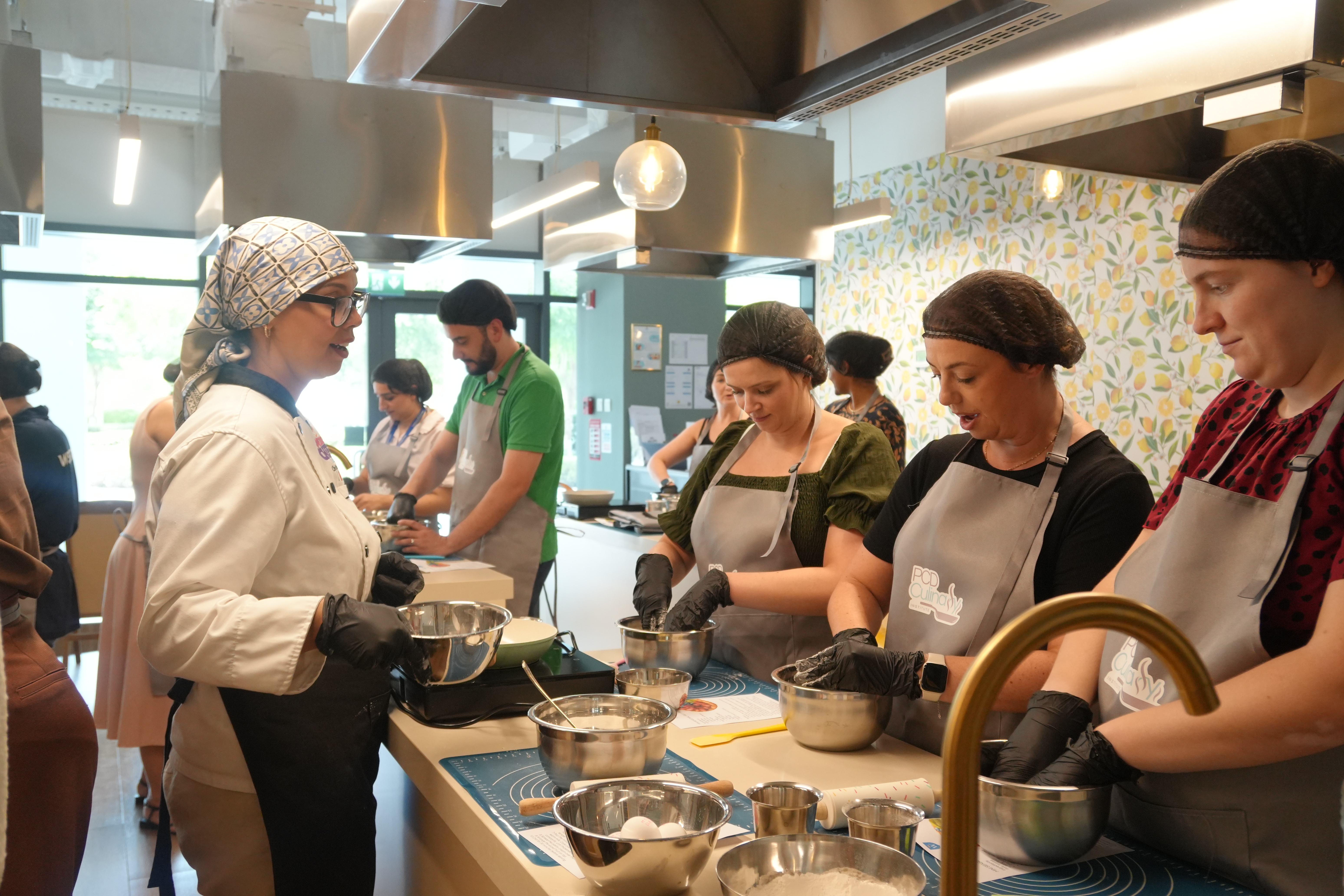
- Guidance arrives while your hands are still on the dough. Small groups mean the chef is there at the moment it matters, not reviewing the result afterwards.
- Everything from scratch
- No mixes, no pre-made bases. Building every component yourself is what lets you diagnose and adjust when something behaves unexpectedly.
- Method before recipe
- Recipes are widely available; the technique underneath them is what we teach. It is what lets you read a recipe critically, adapt it and make it your own.
- Repetition until reliable
- Making something once is a class. Making it come out the same every time is training — and it is what a professional standard rests on.
The institute
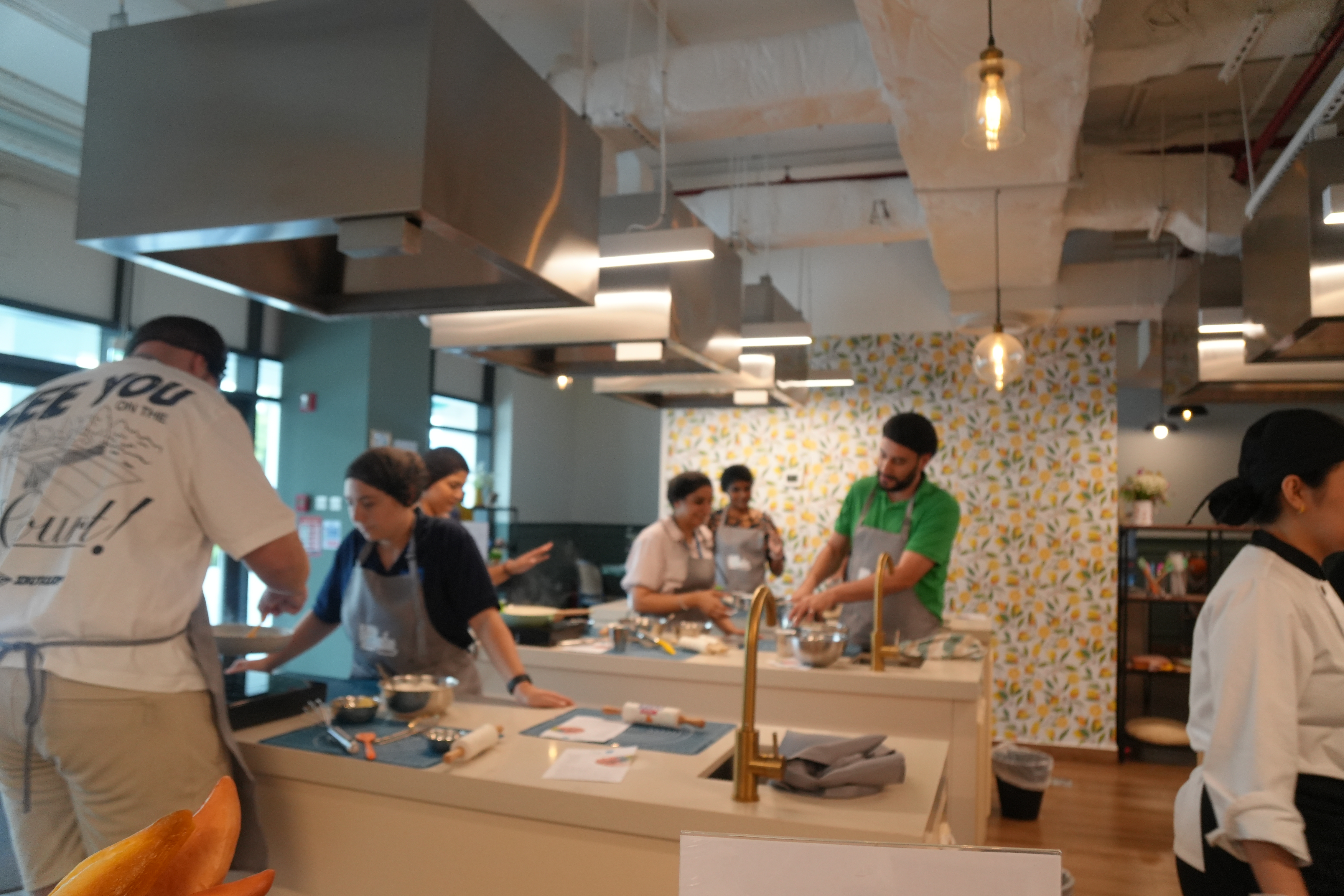
A working kitchen at Expo Village
Six workstations and a main counter where the chef demonstrates and then works alongside you. Professional equipment, extraction, and the hygiene standards a licensed institute is held to.
It is the same kitchen used for our school and corporate programmes — built for teaching, with space to work hands-on throughout the session.
Who teaches
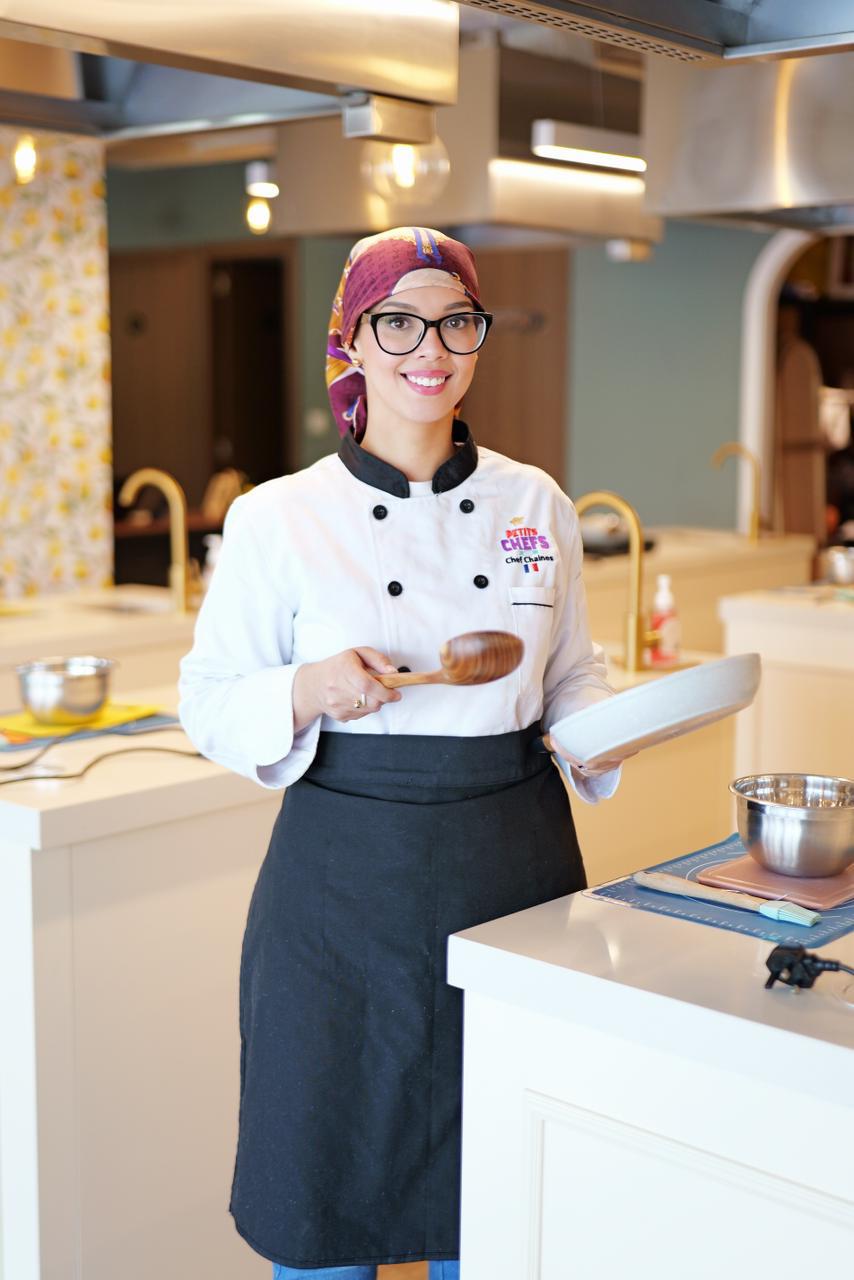
Chef Chaines
Founder & Culinary Director
French, classically trained, and the reason everything here is made from scratch. She built the institute around the way she was taught: technique first, guided in the moment, repeated until it holds.
She will happily talk about butter for an hour — and make you glad you asked.
How to apply
We talk before you enrol
Small classes mean places are limited, and starting at the right level matters more than filling a room. The conversation is short, and there is no obligation.
Send your application
Tell us which programme interests you and what you want out of it. A few lines is enough.
We send the full outline
Course content, dates, session times and fees for the intake that suits you.
A short conversation
By phone or at the institute, to confirm the right level and answer anything outstanding.
Confirm your place
Your place is held on enrolment. Intakes fill in order of application.
Apply for a place
We read every application ourselves and reply with the full course outline, usually within two working days.
- info@petitschefsdubai.ae
- Phone and WhatsApp
- +971 58 560 1987
- Institute
- Expo Village, Dubai
Questions
Before you apply
Do I need any experience to start?+
Programmes run at different levels, and several start from the beginning. Tell us what you have done so far in your application and we will confirm the right starting point before you enrol — putting someone in at the wrong level helps nobody.
Is this a recognised qualification?+
We are a KHDA-licensed training institute (permit no. 700718) and issue a certificate of completion for each programme. It is vocational training rather than an academic degree — ask us directly if you need it recognised for a specific purpose.
What does it cost, and when does the next intake start?+
Fees and dates vary by programme and intake. Send an application and we will reply with the full outline — content, session times, dates and fees — for the intake that fits you.
Can I train around a full-time job?+
Programmes are scheduled in sessions rather than full-time blocks, and private tuition exists precisely for schedules that will not fit a fixed intake. Tell us your availability in your application and we will tell you honestly what fits.
Will this help me start a food business?+
It will give you the technical foundation a food business stands on — consistency, food safety and products you can repeat and price. We are a culinary institute rather than a business consultancy, so licensing and commercial advice sit outside what we teach.
How are dietary requirements and allergies handled?+
Tell us at application stage. Our kitchen runs documented hygiene and allergen protocols, and we will be clear about what each programme can accommodate — French pastry is built on dairy, egg and wheat.
Do I keep what I make?+
Yes. You take home what you produce, along with the recipes and notes for every session.